
C-P Systems
Chemical
C-P Systems provides process engineering and design for specialty chemical, refining, and heavy industrial manufacturing. When the chemistry is intricate, the systems are hazardous, and the regulatory framework is demanding, C-P Systems brings the engineering depth and multi-discipline coordination these projects require.
Contact Us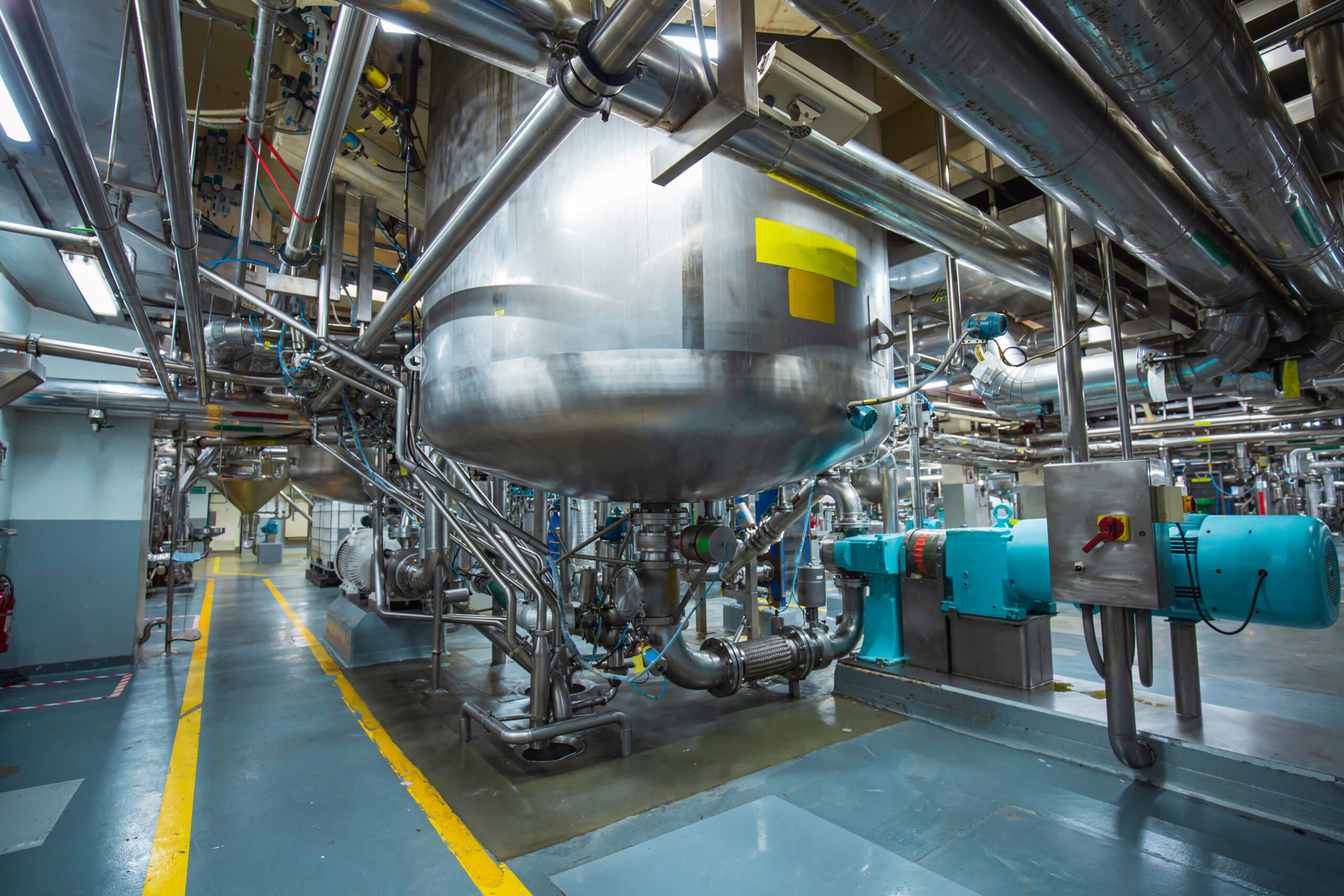
The Problem
Chemical Engineering Depth
Chemical manufacturing depends on unit operations, reactions, and material interactions that leave little room for loose engineering assumptions. Hazardous service, demanding regulatory frameworks, and close interfaces between process, utility, and piping systems all need to be designed together.
Capital Project Bandwidth
Most chemical manufacturers have strong operations and maintenance teams. Capital project engineering, including process design, hazard analysis, pressure system compliance, and construction-ready documentation, requires bandwidth few facilities keep year-round.
Outdated Plant Drawings
Chemical facilities accumulate decades of modifications. P&IDs lag, equipment gets replaced without documentation, and institutional knowledge fills the gap. Designs built on outdated drawings create install-stage rework and operational safety risk.
Compounding Requirements
Codes, standards, and safety requirements stack across the same project. Each modification must satisfy all of them at once, and wrong or late decisions are expensive to undo.
When a reactor modification, new production line, or facility expansion starts, the gap between in-house capacity and project requirements is where delays and risk develop. C-P Systems closes that gap.
The Approach
Multi-Discipline Chemical Engineering
C-P Systems was founded on process engineering for chemical and industrial manufacturing, and that discipline is at the center of the company's approach. The work integrates process, mechanical, structural, and utility engineering on every project, managed through a single point of contact so the facility is not coordinating between separate firms.
The team averages more than 20 years of experience across process and mechanical engineering. Engineers on our team have spent time inside operating plants where unit operations, utility interactions, and maintenance access were daily concerns rather than abstractions. That experience helps inform every decision.
Every project includes a documented design review before anything leaves the office. The same industry-proven project approach applies to every engagement, with front-end engineering design applied before detailed design begins.
Chemical Engineering
Chemistry-Led Design
Reactor systems, unit operations, compounding, mixing with flammable solvents, bulk liquid handling, accurate measurement and dosing, coating operations, inerting, CIP, and solids handling all depend on chemical engineering decisions made early in the project.
C-P Systems leads with chemical engineering depth and coordinates the surrounding disciplines from that base. Piping, electrical, utility, and process safety decisions follow the chemistry being run, rather than forcing the chemistry into a generic layout.
Where We Work
Segments Served
Chemical manufacturing spans specialty chemical production, refining, agricultural chemicals, adhesive and coating operations, and fire protection materials. The engineering challenges vary across segments but share common demands around hazardous materials, precision, and regulatory compliance.
Specialty
Chemicals
Refining
Polymers &
Resins
Adhesives &
Coatings
Agricultural
Chemicals
Fire Protection
Materials
What Plants Run Into
Common Engineering Challenges
These are common points where specialty chemical projects need focused engineering support.
Legacy Drawing Verification
Scenario:A plant has been modified, expanded, and partially rebuilt over thirty years. The most recent P&ID no longer reflects every tie-in, valve, or equipment change. Operators know the workarounds, but the next capital project needs a verified baseline.
Solution:C-P Systems verifies the installed system through 3D laser scanning, field checks, and documentation updates, so new work is designed against current conditions instead of legacy assumptions.
Hazardous Service Basis
Scenario:A vessel modification or piping change in hazardous service needs to meet ASME code, hold up against the plant's process safety requirements, and fit cleanly into a Class I Division 1 environment. The contractor cannot proceed until someone has worked out how it should be built.
Solution:C-P Systems develops the engineering basis: the plan for safe design, construction, and operation of the system in the classified environment. The contractor receives a complete construction package ready to execute.
Existing-Plant Expansion
Scenario:A new product line, expanded reactor, or added batching capacity must integrate with the existing plant's utilities, area classifications, and footprint. A clean greenfield design does not apply.
Solution:C-P Systems engineers the expansion as a system integrated with the existing facility, including utility capacity, hazardous area boundaries, and structural support.
Recent Work
Recent Project Examples
Recent chemical work includes front-end engineering, process safety, and polymerization system design.
Specialty Agricultural Chemistry FEL-2
C-P Systems completed FEL-2 engineering for a new specialty agricultural chemistry production line. The scope defined equipment, layout, and capital cost basis ahead of detailed design, with process safety and classified-area requirements integrated early.
Relief Studies
C-P Systems completed relief studies on tank farms, chemical reactors, heat exchangers, pumps, and specialty equipment such as wiped film evaporators. The work combined relief valves, rupture discs, rupture pins, conservation vents, and tank blanketing, and it delivered complete relief documentation compliant with API 520/521 and OSHA PSM.
Polymerization System Design
C-P Systems engineered a coagulation and polymerization process around ASME stainless reactors explosive-clad to carbon steel for heat transfer. The scope included a tempered water jacket loop, dry screw vacuum pumps, eduction of solids into the recirculation, and a full Class I Division 1 instrumentation and motor specification.
Capabilities
Chemical Capabilities
Process Engineering Design
C-P Systems designs reactor systems, unit operations, compounding and mixing systems with flammable solvents, reaction systems, bulk liquid handling, accurate measurement and dosing, coating operations, inerting, CIP, and solids handling. Material and energy balances are developed against the chemistry being run.
Hazardous Material Handling
C-P Systems engineers flammable solvent handling and distribution, acid and base systems for DI water generation and neutralization, ammonia refrigeration design and hazard analysis, and lethal-service equipment for high-consequence streams.
Process Safety Support
C-P Systems performs relief device studies on tank farms, reactors, heat exchangers, pumps, and specialty equipment such as wiped film evaporators using relief valves, rupture discs, rupture pins, conservation vents, and tank blanketing. The work can include PHA and HAZOP support, mechanical integrity reviews, and OSHA PSM documentation developed to API 520/521 and applicable codes.
Engineering for Classified Areas
C-P Systems supports process and equipment design for Class I Division 1 and Class I Division 2 environments. Equipment selection, instrumentation, and piping are engineered for safe operation in explosive and flammable atmospheres.
Vapor Space Design
C-P Systems provides vapor space engineering for inerting systems, relief valves, conservation vents, and emergency vents. These systems are designed to maintain process safety through normal operation, abnormal conditions, and emergency scenarios.
3D Laser Scanning
In chemical facilities, 3D laser scanning helps verify tie-ins, equipment clearances, pipe routing, and access around hazardous service areas. Scan data supports model development, clash detection, and current-state documentation before design decisions are locked in.
Beyond the Baseline
Process Safety Frameworks
Chemical manufacturing operates under OSHA PSM 1910.119 for hazardous chemicals, ASME standards for mechanical and pressure-rated systems, NEC for electrical classification in hazardous areas, and API standards for tank and vessel design. These frameworks govern what can be built, how it must be documented, and what has to happen before a system can be modified.
C-P Systems designs systems that meet these requirements and supports Process Safety Management documentation, hazard analysis, and compliance engineering for modifications to existing pressure-rated equipment. Compliance is integrated into the design process from the start, not treated as a review step at the end.
Methodology
How C-P Systems Works
C-P Systems uses a process built around chemistry, hazardous service, code requirements, and the information construction needs to execute safely.
Front-End Definition
Work begins with the chemistry, the facility, and the regulatory framework that applies. For existing units, C-P Systems verifies installed conditions, tie-ins, and area classifications before relying on legacy drawings. The review covers process goals, hazardous service requirements, utility needs, and installation constraints.
Engineering Design
The design package develops process definitions, material and energy balances, equipment specifications, instrument and valve selections, piping layouts, and 3D design models. Process safety considerations are integrated while the design is being built, with reviews focused on operating, safety, and installation requirements before issue for construction.
Construction Package
The final package can include P&IDs, piping isometrics, equipment specifications, area classification drawings, 3D models, and contractor scopes of work. Deliverables define the technical basis for hazardous service work before procurement, fabrication, or installation begins.
Field and Startup Support
For chemical work, C-P Systems supports RFI response, field verification, installation coordination, commissioning, and startup when the project requires it. That connection helps keep installation decisions aligned with the process basis, area classification, and safety requirements.
Common Questions
Common Questions
We have an in-house engineering team. When does it make sense to bring in C-P Systems?
We are mid-project and have a gap in process or utility engineering. Can C-P Systems mobilize quickly?
What hazardous materials does C-P Systems design around?
What process safety frameworks apply to chemical work?
How does C-P Systems approach front-end engineering?
What software does C-P Systems use?
C-P Systems
Discuss a Chemical Project
Chemical projects need early alignment across chemistry, piping, utilities, process safety, and the codes that govern the work. C-P Systems can support feasibility review, process engineering, equipment specification, relief studies, vapor space design, classified-area process design, construction packages, and startup support for chemical manufacturing facilities.