What Lethal Service Means
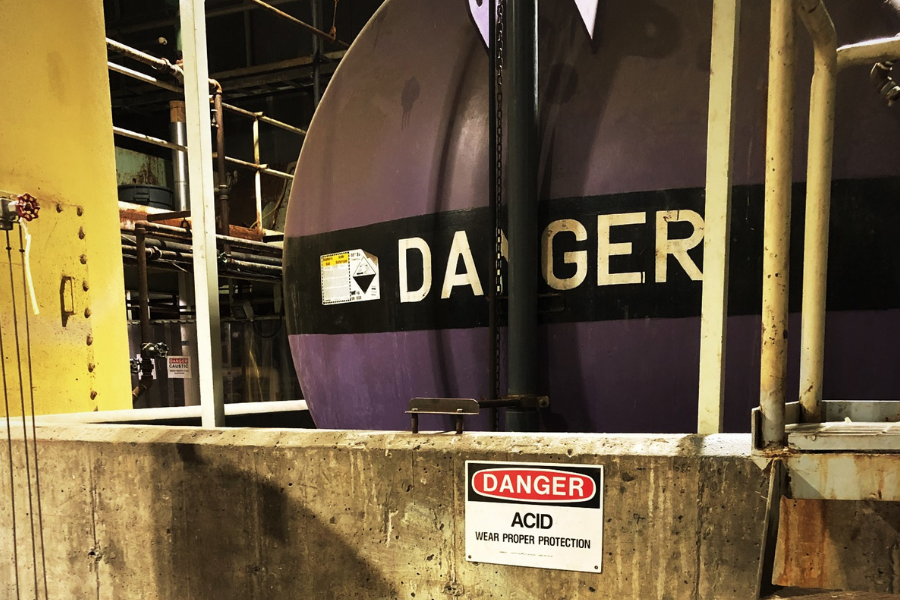
The ASME code defines lethal service as a designation for vessels that store or process chemicals toxic enough that even a small release could be fatal. The simplest way to describe the threshold: if someone could breathe it and die, it likely qualifies.
The code does not maintain a list of chemicals that require lethal service. That was deliberate. A published list creates a false boundary. Companies could point to it and say their chemical is not on it, even when the conditions warrant the designation.
Who Decides
The decision belongs to the owner or operator of the vessel, not the fabricator and not a government body. The company that operates the vessel determines whether a chemical meets the threshold.
Several factors go into that decision:
- The toxicity of the chemical itself
- Operating pressure and temperature
- The physical location of the vessel (populated area versus remote site)
- How much of the chemical is stored
- Whether the chemical could vaporize quickly in a release
Some chemicals are straightforward. Nerve gas, phosgene, and similar substances are always designated lethal service, regardless of conditions. Others fall into a gray area.
The Gray Area
At one chemical manufacturing facility, hydrofluoric acid was designated lethal service at certain plant locations. Most of the industry did not make the same call for HF acid. The deciding factor was proximity to populated areas.
This kind of judgment call is common. Companies weigh the severity of the chemical against the specific conditions at their facility. Designating one chemical as lethal service can raise questions about similar chemicals stored elsewhere on the same site. The decision carries precedent. It’s important to understand the downstream implications if the designation is applied.
Other chemicals like hydrogen sulfide and high-concentration sulfuric acid sit in a similar zone. Some companies designate them. Most do not. The reasoning comes down to site-specific conditions and how much risk a facility is willing to carry.
Writing the Specification
Once the decision is made, it goes into the fabricator specification. That specification includes everything the code requires for lethal service, and in some cases, it goes beyond the code minimum. A weld type that the code does not strictly require to be fully welded through the joint might be specified that way regardless. A fitting might be called out for radiography even when the code does not mandate it.
The code sets the floor. The specification can raise it. Everything that matters about the lethal service decision has to be documented clearly enough that a fabricator can execute it without ambiguity.
What Changes in Fabrication
Lethal service imposes three main requirements beyond standard vessel fabrication.
Full radiography: Every butt weld on a lethal service vessel must be X-rayed. For standard vessels, fabricators can choose between full radiography, spot radiography, or none at all. The code accounts for this through a derating structure: full radiography allows the vessel to operate at 100 percent of its calculated capacity, spot radiography at 85 percent, and no radiography at 70 percent.
Full penetration welds: Any weld attaching a nozzle or pipe to a lethal service vessel must be a full penetration weld. Standard vessels allow other weld types that are faster and less expensive, but those do not provide the same level of structural integrity.
Heat treatment: Carbon steel lethal service vessels must be stress-relieved through heat treatment. The vessel is placed in a furnace at approximately 1,100 degrees Fahrenheit, held for several hours, and cooled slowly. This relieves stresses in the steel around the welds and reduces the likelihood of cracking or stress fractures.
On one early project, a 30,000-gallon lethal service tank was roughly 60 feet long. The fabricator did not have a furnace large enough, so the vessel was heat-treated in two passes, one half at a time.
What Does Not Change
The quality of the welds themselves is the same for lethal service and standard vessels. A defect that would fail a lethal service inspection would also fail on a standard vessel. The difference is in the percentage of welds that are radiographed, not in how they are made. Lethal service requires verifying every weld, which means defects are far less likely to go undetected.
Certain types of fittings and components are also restricted, e.g. stub ends for lap joint flanges must be fabricated by a specific procedure detailed in the code.
Inspection and Documentation
The inspector who certifies a lethal service vessel is an independent third party contracted by the fabricator, not a government inspector. For lethal service, the review covers heat treatment records (temperature charts showing hold times, peak temperatures, and cooling rates), all radiographic results, and complete material traceability from mill certification through fabrication.
Every piece of steel in the vessel must be traceable back to its origin. The fabricator must show that the correct material was ordered, received, marked, and installed in the correct location. This level of traceability is standard practice for all ASME vessels, but the inspector scrutinizes it more closely for lethal service because the consequences of a material error are more severe.
The inspection takes longer and costs more for lethal service. The additional time is primarily in reviewing the full radiographic records and heat treatment documentation. The incremental cost is modest relative to the overall cost of the vessel.
Category M Piping
The lethal service designation on a vessel ends at the flange. Beyond that point, the ASME Process Piping Code (B31.3) takes over, and it has its own designation for hazardous service: Category M.
A lethal service vessel does not automatically require Category M piping. The two designations are governed by separate codes and determined independently. A facility can have a lethal service vessel without Category M piping, depending on conditions downstream of the vessel flange.
When Category M does apply, the requirements follow a similar logic. Pipe must be seamless or have radiographed seam welds. Butt welds must be X-rayed. Certain types of flanges and fittings are restricted to ensure every weld can be properly inspected. There is no heat treatment requirement for Category M, though heat blankets can be applied to individual welds if additional stress relief is needed. A sensitive leak test is required for all Category M piping. The practical effect is that piping design must account for Category M requirements from the start, not as an afterthought during construction.
Cost Considerations
Building a vessel to lethal service does not dramatically increase cost. The materials are the same. The labor is largely the same. The additional expense comes from the extra fabrication time for radiography, heat treatment, and inspection review. In most cases, that adds a few days to a few weeks to the fabrication schedule.
If the designation is not made before fabrication begins, the situation changes. The quality control steps for lethal service have to be performed at specific stages during fabrication. If those stages have passed, the work cannot be done retroactively. In that case, the vessel has to be scrapped or repurposed, and a new one fabricated from the beginning. Specialty steels and exotic alloys can have long lead times, and a fabricator who has already committed shop time may not be able to accommodate a restart on the same schedule. Depending on the materials and vessel size, that can extend a project timeline by six months or more.
Not designating lethal service is not a code violation on its own. If a release occurs and the chemical was hazardous enough to warrant the designation, however, the operating company carries significant liability exposure. OSHA has the authority to impose fines, and civil litigation typically follows.
The cost difference between building to lethal service and not is relatively small. The cost difference between designating before fabrication and discovering the need afterward is not.
Existing Vessels and Transition Planning
If a new vessel is designated lethal service for a chemical that older vessels at the same facility also store, the older vessels do not have to come offline immediately. A plan should still be in place. That might mean a five-year replacement timeline with increased inspection frequency in the interim. The goal is to manage the transition without shutting down operations while still addressing the gap.
What It Comes Down To
Lethal service adds a few days to fabrication and a modest increase in cost. What it requires most is a clear decision, made early, supported by the right questions. The designation cannot be applied after the fact, so the engineering work that happens before fabrication begins carries more weight than anything that follows. For questions about lethal service designation or fabrication specifications, reach out to our team.
Frequently Asked Questions
What is a lethal service vessel?
A lethal service vessel is a pressure vessel built to stricter fabrication requirements under the ASME Boiler and Pressure Vessel Code. The designation applies to vessels that store or process chemicals toxic enough that even a small release could be fatal. Fabrication requires full radiography of all butt welds, full penetration welds on all nozzle and pipe connections, and post-weld heat treatment for carbon steel.
Who determines whether a vessel needs to be designated lethal service?
The owner or operator of the vessel makes that determination. There is no official list of chemicals that require the designation. The decision is based on the toxicity of the chemical, operating pressure and temperature, the physical location of the vessel, and how much of the chemical is stored.
What is the difference between lethal service and a standard ASME vessel?
The materials and weld quality are the same. The difference is in verification. Lethal service requires full radiography of every butt weld, while standard vessels can use spot radiography or none at all. Standard vessels without radiography are derated to 70 percent of their calculated capacity. Lethal service also requires full penetration welds on all connections and heat treatment for carbon steel.
Can a standard vessel be converted to lethal service after fabrication?
No. The quality control steps required for lethal service must be performed during fabrication. If those stages have passed, the work cannot be done retroactively. The vessel has to be scrapped or repurposed, and a new one fabricated from the beginning.
What is Category M piping?
Category M is the ASME piping code designation for hazardous service piping. It is governed by a separate code from the vessel designation and determined independently. A lethal service vessel does not automatically require Category M piping. When Category M does apply, it requires seamless pipe or radiographed seam welds, X-rayed butt welds, and restricted fitting types.