Beyond the Model: Why Constructability Matters
Most industrial clients understand that their ultimate goal isn’t just a well-executed piping design but a fully functioning process resulting from a well-run project. What’s sometimes overlooked is how directly constructability impacts cost and schedule.
Poor constructability leads to:
- Extensive field modifications
- Increased rework
- Extended timelines
- Higher labor costs
- Compromised system reliability
- Frustrated installation teams
Industry shifts have made constructability increasingly critical:
- Skilled labor shortages mean every hour of installation work must be optimized
- Compressed project schedules require error-free design packages that can be executed efficiently
- Tighter space constraints driven by 3D modeling tools create expectations for fitting more equipment in smaller areas
- Prefabrication economics are compelling, with on-site installation labor costing 2-3 times more than off-site work
- Single source project delivery is increasingly common, where owners expect one contract to deliver complete, functional systems
The Anatomy of Constructible Piping Design
Constructability begins with understanding that piping is more than just a conveyance from point A to point B. It’s a system requiring intentional design decisions at every step.
Field-Validated Planning
Theoretical perfect alignment rarely exists in the field. The gap between CAD precision and real-world conditions requires designers to:
- Verify site conditions via laser scan or field verify rather than relying solely on drawings
- Account for reasonable tolerances and tendency for tolerances to compound over space
- Allow for flexibility in installation approaches
- Create detailed installation sequences that anticipate potential challenges
One project brought this challenge into sharp focus: a legacy facility with tight spaces and specialty lined piping that had to be prefabricated off-site. With limited flexibility once fabrication began, the risk of a misaligned fit-up was high. Instead of locking in final equipment locations early, we sequenced the install intentionally by rough-setting equipment, routing the pipe, and then matching final equipment placement to align with the modeled system. That one decision kept the installation on track and ensured a fit that could have otherwise failed under real world field conditions.
Integration with Construction Reality
The best designs anticipate construction equipment needs and access paths. This includes:
- Accounting for lift and crane clearances
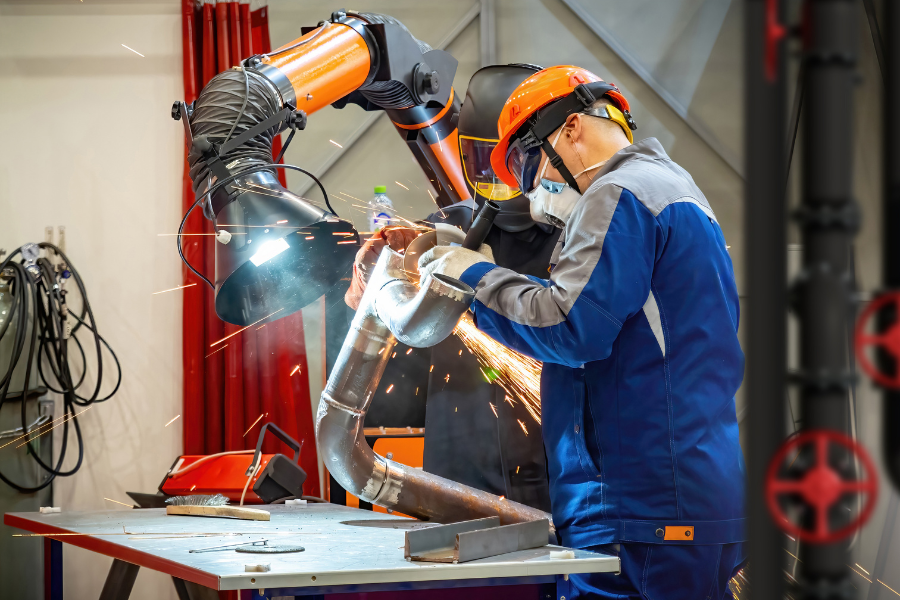
- Planning field welding locations with welder access in mind
- Designing spool pieces sized for smooth installation
- Specifying proper break points with flanges or unions
- Providing clear and comprehensive documentation that isn’t overly cluttered
Access and Maintenance Realities
Even the most sophisticated design can fail in the field if it doesn’t consider fundamental questions:
- Can a welder physically reach each joint?
- Do valves have sufficient clearance for operation and replacement?
- Is there adequate space for maintenance activities?
- Can components be installed in a logical sequence?
Experienced piping designers approach these questions proactively, visualizing the installation process before finalizing designs.
Material Selection and Specification
Material selection forms the foundation of constructible design, balancing process requirements with installation considerations. Experienced designers don’t assume that clients or project managers are fully versed in piping materials or their own specifications. When something doesn’t align with best practices, questioning assumptions becomes essential.
Proper specification of pipe supports based on material properties and flow characteristics is particularly crucial. We’ve seen facilities where insufficient support design led to excessive vibration, water hammer, and even decoupled pipe hangers. This left long runs of unsupported piping that endangered both the process and personnel safety.
Common Pitfalls and How to Avoid Them
Seasoned designers have learned to avoid several common constructability mistakes:
|
Pitfall |
How to Avoid It |
|
Tunnel Vision on Routing |
The most direct path is rarely the most constructible, maintainable, or ergonomic one. Consider the lifecycle of operations, including future flexibility, not just the shortest route. |
|
Overlooking Installation Sequencing |
Plan equipment transport paths and installation order early in design. Models that look feasible in isolation can become impossible when considering the sequence of operations. |
|
Ignoring Thermal Effects |
Account for expansion and contraction with proper supports, expansion loops, and flexible connections to avoid excessive stress, premature failure, and installation challenges. |
|
Late Instrumentation Integration |
Include instrument requirements in initial piping layout rather than layering them in after routing is complete. Instrument functionality requires early integration and basic functionality checks. |
|
Ignoring Manufacturer Requirements |
Ensure devices are installed per manufacturer specifications, particularly instrument diameter, insertion length, orientation, access, and clearances. A component that fits on paper but can’t be installed in the field offers no value. |
Principles of Constructible Piping Design
Creating truly constructible piping designs relies on several core principles:
- Think in Three Dimensions: Experienced designers operate in three-dimensional space, anticipating material movement and visualizing the installation process. They mentally “install” each pipe spool, considering the sequence, tools required, and potential field challenges.
- Question Constraints: Challenge design constraints and identify points of flexibility from the start. Equipment might be oversized due to habit, copy-pasting from previous projects, or insufficient analysis of tradeoffs between cost, time, and space requirements.
- Involve All Stakeholders Early: Engage fabricators, installers, operations personnel, and maintenance teams in design reviews. Each stakeholder brings a unique perspective that can identify potential issues before they become costly problems in the field.
- Document Design Intent Clearly: Ensure documentation clearly communicates not just what to build, but how to build it. This includes installation sequences, critical dimensions, and key considerations for field teams.
- Allow for Field Reality: Design with reasonable tolerances and include contingency space in congested areas. The 3D model represents theoretical perfection, but installation requires accounting for the human element of real-world construction.
The Bottom Line
Constructability isn’t just a final checklist item. It’s a mindset woven through every detail of design from initial routing to final documentation. When done right, it saves time, reduces costs, minimizes rework, and ensures the system works not just on paper, but in the real world.
By considering the entire system lifecycle from installation through eventual decommissioning, and balancing the needs of all stakeholders, constructible piping designs build trust between project teams and deliver processes that perform reliably for years to come.